
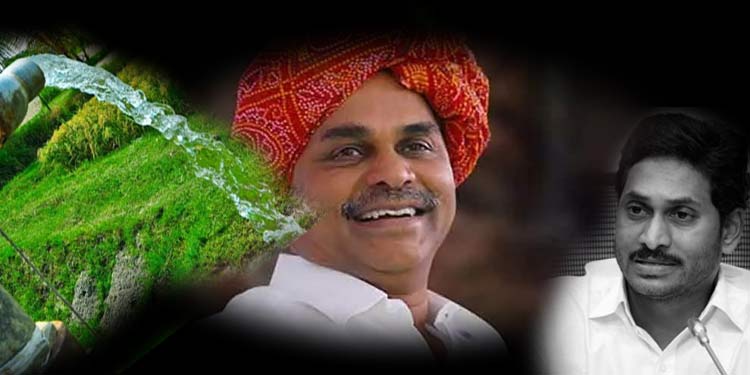
Andhra Pradesh energy department secretary Nagulapalli Srikanth announced that farmers have to pay power bills and the government will reimburse the money by remitting it into their accounts. The AP government has decided to fix meters for agriculture connections. Power to farmers has been free since 2004 as the government is directly transferring the amount to power distribution companies (discoms). What may be the reason behind the government’s decision to fix meters? Will this decision benefit farmers? Why are farmers agitated over the government move? Let us look into the issue.
The government said there are 18 lakh agricultural pumpsets in the state. Every year, the government is transferring Rs 8,400 crores to discoms towards the cost of power supplied to these farm connections. This comes to Rs 50,000 a year per pumpset. Currently, the power consumed by each pumpset is not being measured. Instead, reading taken at a random meter fixed at one place is being applied to the entire district.
This is not an ideal system and power companies are complaining that they are incurring huge losses. Further, the government is not transferring the money to them in time, which is pushing them deeper into debts. In AP alone, discoms have debts of up to Rs 20,000 crore. According to the latest decision of the government, smart meters will be fixed to every pumpset.
Are smart meters possible?
The government has decided to fix smart meters to all 18 lakh agriculture pumpsets. The process will begin with pilot project in one district, and will be extended to all the districts from January next year. While fixing meters to lakhs of remote agricultural fields is a tough task, taking the reading from them every month will certainly be a near impossible job. An attempt by the previous government to fix meters to pumpsets kicked up a storm as farmers feared huge bills.
Farmers feel that the government has taken this decision to reduce its financial burden on account of free power. It is learnt that the government may remove farmers without white ration card, income tax payees, car owners, government employees from the list of free power beneficiaries’ list.
Why farmers are opposing?
Farmers were elated by NT Rama Rao’s election promise to collect only Rs 50 per year per horsepower. They paid only Rs 250 per year for 5 HP motor. However, in later years, owing to fluctuating fortunes in agriculture, farmers could not pay even that amount.
Chandrababu Naidu who came to power in 1996 wanted to reform the crisis-ridden power sector. To ensure financial accountability for every unit of power produced, he effected hike in tariff, including agriculture sector. His government also fixed meters to some farms and farmers were forced to pay Rs 50,000 to Rs 1 lakh a year. This led to severe unrest among farmers which ultimately led to defeat of TDP in 2004. The present move by the Jagan government to fix meters is bringing back those memories among farmers.
For the sake of more loans?
The metering of farm power may be prompted by the need to pull discoms out of financial mess they are in now. More lenders will come forward if there is a balance between costs and earnings. The Centre’s latest guidelines are directing the states to take the path of reforms. It is seen as a move by the state government to make power discoms self-reliant financially.
1,000 MW solar plant in Kadapa
The YSRCP government is planning a 1,000 Megawatt (mw) solar power plant in Kadapa district and needs huge amount of loans for the project. This could be the reason to streamline financial accounting of power production and revenues. Government will be able to get loans from financial institutions and World Bank only if it fixes the accounts of discoms. Fixing meters to agriculture pumpsets is one of the measures aimed at this exercise.
To assuage fears of farmers, the government is saying that farmers will get money in their accounts in advance and only then they can pay the bills. No state has so far fixed meters to agriculture pumpsets. No doubt the move is causing concern among farmers. Let us see how far the government can go to allay their fears and apprehensions.